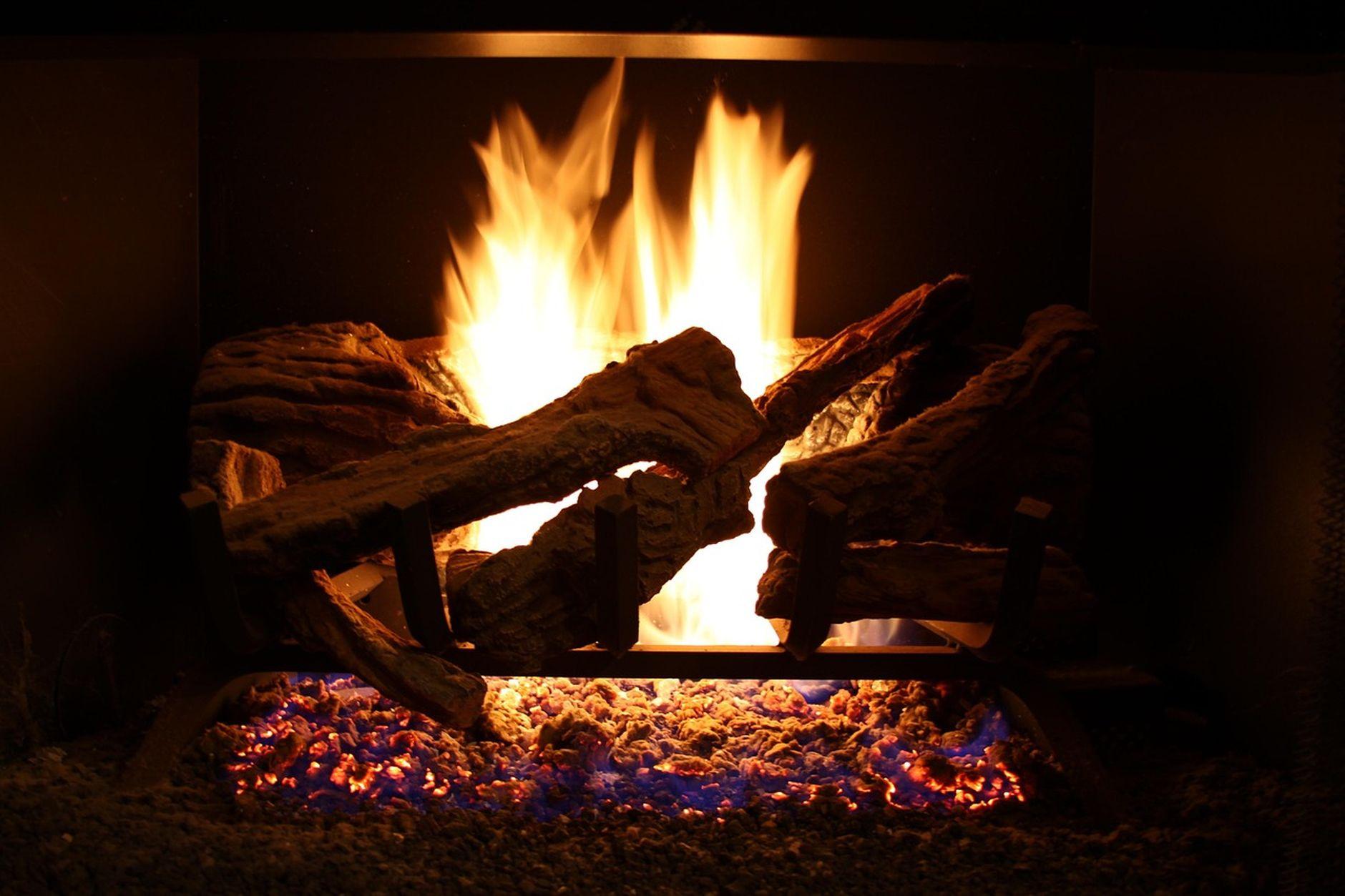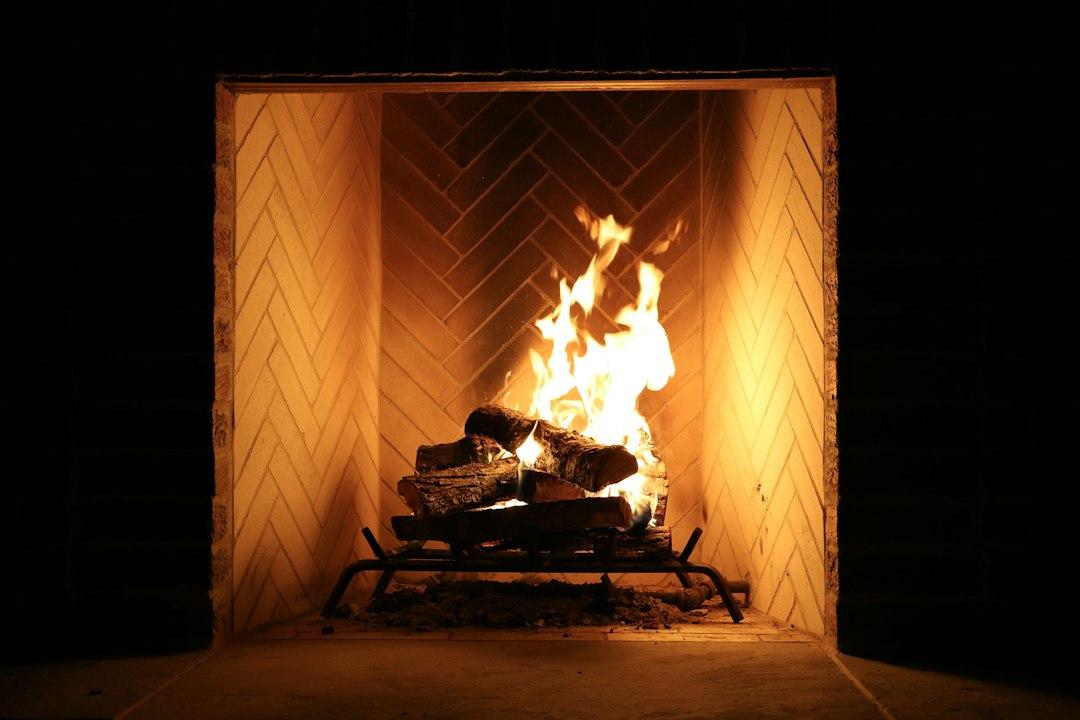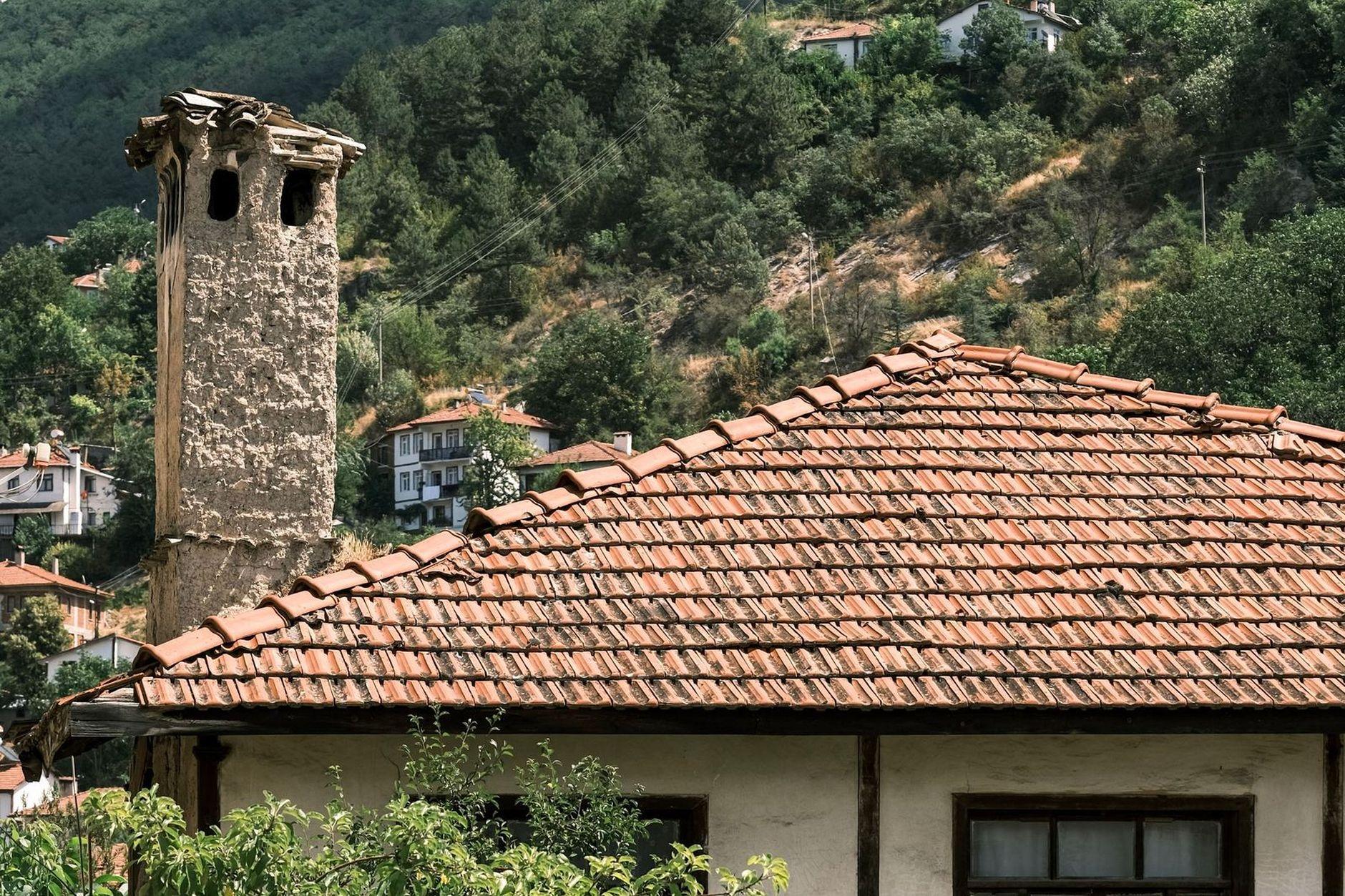
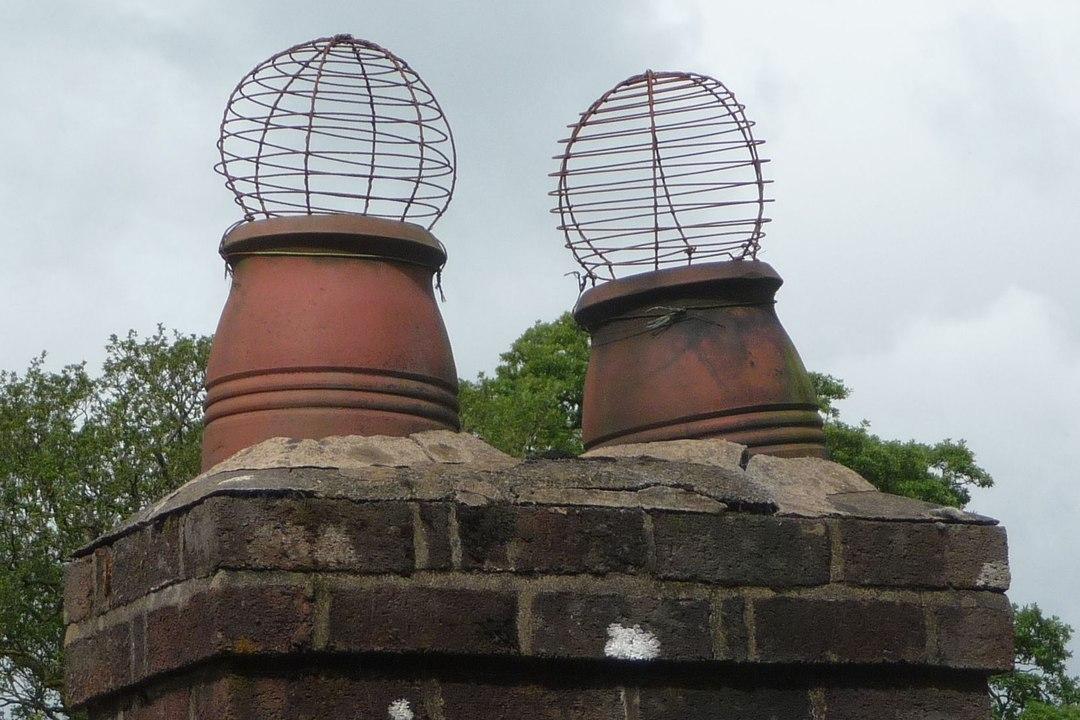
On the monitor, the first ten feet above the stove look like the inside of a burnt pot: a black crust on the clay tile, thick enough that the camera light barely reflects. Higher up, the crust thins out to brown and then to grey, and at one joint about two thirds of the way up there is a dark line where two tiles no longer sit square. That picture is what most of our liner jobs in Signal Hill start from, and it explains the job better than any sales sheet.
Why a stove and an old flue fight
Most brick chimneys around here were built for an open fireplace. An open fire pushes a lot of hot air up a wide flue, and the flue was sized for that. A wood stove is the opposite. It burns slowly behind a closed door and sends a small, cool stream of smoke out of a collar a few inches across. Put that small stream into a big clay flue and it slows down and cools off on the way up. Cool smoke drops its tar on the tile. That is the black crust in the picture.
The second problem is the tile itself. Clay flue liners from older houses have joints that were mortared at the time and have had decades to crack, wash out or shift. The 1994 quake and the smaller shakes since then moved a lot of chimneys in Los Angeles County a little, enough to open a joint without showing anything outside. An open joint lets heat and smoke reach the brick around it, and in a chimney fire that is where the trouble starts.
A steel liner answers both. It is sized to the stove collar, so the smoke keeps its speed and its heat all the way up. And it is one sealed run from the stove to the top, so cracked tile behind it stops mattering for the smoke.
What we look at before anything is ordered
Every liner job starts with the camera, because the liner has to fit what is actually in the chimney:
- The size and shape of the existing flue, top to bottom.
- Any offsets, where the flue bends to clear a beam or a second flue.
- Cracked, shifted or missing tile, and how much tar is on it.
- The smoke chamber or thimble where the stove pipe enters.
- The crown and the top of the chimney, where the liner will finish.
That camera run is our Level 2 inspection, $405. If the flue is too coated for the camera to see the tile, it gets swept first, and a sweep starts from $435.
What decides the price
Liner installation has no published figure with us, because no two chimneys take the same liner. We put a price on paper once the camera has shown us the flue, and it comes down to a handful of things:
1. Height. The liner runs the full height of the chimney, and longer means more steel and more time on the roof. 2. Diameter. It follows the stove's collar. A large stove needs a larger liner. 3. Flexible or rigid. A straight flue can take rigid sections; offsets usually call for flexible stainless. 4. Insulation. Whether the liner needs a wrap depends on how close the chimney sits to wood framing and on the stove maker's instructions. 5. The connection at the bottom. A stove set into a fireplace connects one way; a freestanding stove piping into a wall thimble connects another. 6. The top. A new top plate and cap. Caps are quoted after we measure, and size and metal set the price.
Every item above shows up separately on the written quote, so no figure hides inside another.
Ask for a liner quote and give the address, the stove's maker if the badge is still readable, and whether it sits inside an old fireplace or stands out in the room with its own pipe.
How a liner job goes
On the day, the room around the stove gets covered first. The stove is disconnected and, if it sits in a fireplace, pulled forward. Up top, the old cap comes off and we check the crown again. The liner goes down from the roof, wrapped if the job calls for it, and is connected at the bottom to the stove collar or the thimble. At the top it is fixed to a plate that closes the flue opening, and a cap goes on over it. The stove goes back in, gets lit, and we watch it draw.
You get photos of the finished top and bottom with the paperwork.
Signs your stove flue needs a look
- The glass blackens within an hour of every fire, even with dry wood.
- You smell smoke in the room when the stove is shut and the weather turns.
- Black, flaky crust falls out when the door opens.
- The stove is hard to get going and smokes back when lit.
- You have never had the flue checked since the stove went in.
None of those means you need a liner. Each one means the flue is worth a camera run before next winter.
Burn days and why a liner still pays
Rule 445 from the South Coast AQMD means some winter days are no-wood days across the basin, Signal Hill included. That cuts the number of fires, not the need for a sound flue. A stove that only runs on the allowed evenings still needs to send its smoke up and out without coating the tile, and a properly sized liner is how that happens.
Read next
- Chimney liner installation covers the work in more detail.
- Wood stove repair is for the stove itself.
- Sweep prices for wood burners explains what the sweep before a camera run costs.
- Up to code chimney repairs lists the flue fixes that come up after a failed Level 2.
A flue that has been fighting your stove for years can usually be sorted in one job. The contact page is where to send the details, and we will come out to Signal Hill, Long Beach, Carson or Cerritos with the camera.
Burning Through the Winter?
Moffett Chimney Sweep sweeps flues and fixes wood stoves, pellet stoves and inserts from Signal Hill outward. We replace the parts that wore out and say plainly when a flue should not be lit.